Ice Machine Repair in San Francisco, CA
Ice machines usually show production changes long before complete failure happens. Ice cubes become smaller, softer, or uneven from one cycle to the next. Production slows down during heavier use, or the system struggles to recover after the bin empties. In San Francisco homes where built-in ice makers operate inside compact kitchens, entertainment spaces, or enclosed cabinetry, these performance shifts tend to appear gradually as freezing cycles lose stability. Ice machine repair in San Francisco, CA, should focus on how water intake, freeze timing, airflow, and ice release behavior interact so the system can return to steady, predictable ice production.
How Ice Production Problems Start Gradually
Ice machines rely on repeated freezing and release cycles that must stay balanced across water flow, temperature control, and timing. Small inconsistencies inside those systems often appear first through cube quality changes instead of complete shutdowns. Ice may become thinner, softer, or irregular before production slows enough to become obvious. A slight restriction in water flow can change cube formation. Small temperature instability can extend freezing cycles and reduce output consistency. Because ice machines repeat these cycles continuously, small imbalances gradually create larger production problems over time.
- Water Intake Controls Consistent Ice Formation
- Freeze Timing Affects Cube Size And Density
- Temperature Stability Supports Reliable Ice Production
- Harvest Cycles Influence Output Consistency
- Airflow Conditions Affect Freezing Efficiency
- Ice Release Timing Impacts Production Recovery
- Early Diagnostics Reduce Repeat Output Problems
In high-use homes and entertainment kitchens, these issues become more noticeable because the machine must recover quickly after repeated demand. Correcting small cycle imbalances early helps prevent unstable production patterns from spreading across the entire system.
Experience With Real Ice Production Behavior
Ice machines respond heavily to the environment surrounding them. An undercounter unit in a modern Mission Bay condo may deal with tighter ventilation conditions, while a built-in system in Pacific Heights may experience heavier entertainment-related usage patterns. These environmental differences directly influence freezing speed, airflow movement, and production recovery.
L&M Appliance Repair LLC approaches ice machine troubleshooting in San Francisco by studying how the system behaves during active production cycles rather than focusing only on visible symptoms. Water movement, freezing consistency, ice release timing, and recovery behavior are evaluated together to understand how the appliance performs during real household use.
- Freeze Cycle Review: Cube formation and freezing consistency are evaluated across repeated cycles.
- Water Flow Analysis: Intake stability and distribution behavior are reviewed carefully.
- Temperature Stability Check: Cooling response and recovery timing are tested together.
- Repair Direction: Solutions focus on restoring balanced production behavior across daily use.
Ice Machine Repair Services For Consistent Ice Production
Commercial ice machine repair in San Francisco requires more than restoring basic freezing ability. Ice systems depend on balanced water intake, steady freezing temperatures, reliable harvest cycles, and stable airflow conditions to maintain consistent production.
Ice Maker Repair For Slow Or Uneven Production
Ice makers that produce smaller cubes, inconsistent batches, or slower output often indicate an imbalance within the freezing cycle. Water intake restriction, temperature instability, or freeze timing drift can gradually reduce production quality. Repair restores steadier cube formation and more reliable output consistency.
Ice Machine Water Flow And Fill Repair
Ice machines depend on controlled water delivery during each production cycle. Irregular water flow or unstable fill timing can create hollow cubes, uneven freezing, or interrupted production patterns. Repair helps restore smoother water distribution and steadier ice formation behavior.
Ice Harvest And Release System Repair
The harvest cycle controls how ice releases from the freezing surface into the storage bin. Delays or sticking during release often disrupt the next production cycle and reduce overall output. Repair restores smoother release timing and more stable cycle recovery.
Ice Machine Temperature And Freeze Control Repair
Freezing temperatures must remain stable throughout repeated production cycles. When temperature regulation drifts, ice quality changes, and output slows down. Repair restores more balanced freezing control and steadier production timing.

Hidden Ice Machine Issues That Quietly Affect Output
Some ice machine problems remain subtle because the system still produces ice, but the internal balance continues drifting. These hidden issues become more noticeable during heavier use or repeated production cycles where timing and freezing consistency matter more.
Airflow Restriction Around Built-In Units
Undercounter and built-in ice machines depend on controlled ventilation to release heat properly. Restricted airflow gradually affects freezing efficiency and slows production recovery between cycles.
Water Quality And Mineral Buildup
Mineral accumulation inside water pathways or freezing components can reduce flow consistency and affect cube formation. These changes often develop slowly before becoming visible in ice quality.
Freeze Timing Drift
Repeated production cycles gradually affect how long the system freezes each batch. Small timing inconsistencies create uneven cube density and reduce production efficiency over time.
Ice Release And Cycle Delay Problems
If the release system hesitates or sticks during harvest cycles, the machine cannot transition smoothly into the next freeze cycle. This gradually reduces total output during heavier daily use.
How Different Ice Machines Are Repaired
Scotsman ice systems often reveal performance issues through harvest-cycle timing inconsistency and gradual production slowdown during repeated use. KitchenAid undercounter ice makers are particularly sensitive to airflow restriction and water-quality-related buildup inside compact installations. GE Profile systems commonly show uneven cube formation when freeze timing begins drifting over time, while Sub-Zero integrated ice systems rely heavily on stable temperature recovery and precise release sequencing to maintain consistent output. Each ice machine design responds differently to environmental conditions, freezing demand, and daily production load.
What Changes After A Fully Detailed Ice Machine Repair
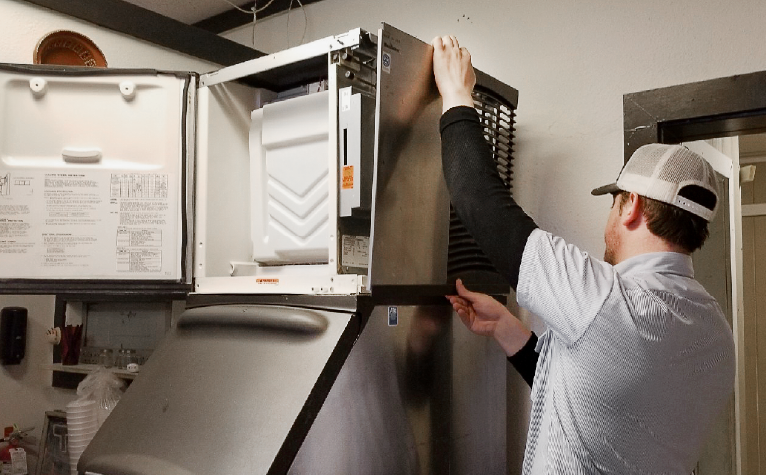
A complete repair should improve how the system behaves across full production cycles, not just restore temporary ice output. Cubes should form more consistently, freezing cycles should stabilize, and the machine should recover faster after heavier demand. In San Francisco homes where undercounter and built-in ice systems often operate inside compact kitchen layouts, these adjustments matter because small airflow or freeze-cycle imbalances gradually reduce production reliability. Ice machine repair in San Francisco, CA, helps restore balanced ice production behavior by correcting the freezing, water-flow, and harvest-cycle conditions behind inconsistent output.





Frequently Asked Questions
This usually happens when freezing cycles stop reaching stable temperatures or water flow becomes inconsistent. The machine still produces ice, but the cubes no longer freeze evenly, causing a softer texture and reduced density during repeated production cycles.
As the system runs repeatedly, internal heat buildup and airflow restriction can affect freezing recovery. Built-in units in compact kitchens often experience slower production later in the day because the machine struggles to release heat efficiently after repeated cycles.
Hollow or uneven cubes often point toward inconsistent water fill timing or unstable water flow during freeze cycles. The machine begins freezing before the mold receives balanced water distribution, creating irregular cube formation.
Noisy harvest cycles often develop when ice release timing becomes unstable or mineral buildup affects moving components. The system works harder to separate the ice from the freezing surface, creating a more noticeable sound during release.
Built-in systems operate within tighter cabinetry and enclosed spaces where ventilation margins are smaller. Reduced airflow around the unit affects how efficiently the machine removes heat during repeated production cycles.
Maintenance becomes important when cube size changes, production slows, freezing cycles extend, or ice release starts becoming inconsistent. Addressing these early signs helps reduce long-term strain on the freezing and harvest systems.
Appliance Repair Coverage Across San Francisco Neighborhoods
L&M Appliance Repair LLC services homes, apartments, condos, and mixed-use properties throughout San Francisco, including coastal neighborhoods, downtown high-rises, historic districts, and compact urban residential environments.
Get Your Ice Machine Fixed Rapidly
Services
- Appliance Installation
- Kitchen Appliance Repair
- Refrigerator Repair
- Water Heater Repair
- Dishwasher Repair
- Washer & Dryer Repair
- Electric & Gas Range Repair
- Stove Repair & Maintenance
- Built-In Refrigerator Repair
- Cooktop Repair & Maintenance
- Ice Machine Repair
- Wine Cooler Repair
- Trash Compactor Repair
- Garbage Disposal Repair
- Commercial Appliance Repair
- Commercial Refrigeration Repair
- Commercial Ice Machine Repair
- Commercial Cooking Equipment Repair
- Commercial Washer & Dryer Repair
- Commercial Dishwasher Repair

Call Us Now!
Timings:
- SUNDAY to FRIDAY: 8 AM to 8 PM
- SATURDAY: CLOSED